Our primary objective is safeguarding the health and safety of our employees, their families and surrounding communities – everyone should work and live in a safe environment every day.
We promote equality, diversity and professional development for employees at every business level with attention to their physical and psychological well-being.
Related sustainability principles
Select an icon to view principles
Creating a safe and healthy working environment
Prioritising the development and well-being of our employees
Optimising socio-economic benefit
Related UN SDGs
We launched the first rolling three-year cycle to embed the UN SDGs into our systems, processes and decision-making during the year. The following UN SDGs relate to our employee pillar:
Continuously mitigating the impact of COVID-19 on our workforce and PACs.
Addressing our operational safety culture through a comprehensive leadership and safety campaign.
Attracting and retaining talent with the required skills and relevant experience.
Our future
We will continue ensuring our employees’ safety and health as the pandemic continues, leveraging our existing COVID-19 management protocols and vaccination programme to keep our workforce safe.
We will continue to deepen our understanding of the safety culture maturity of our workforce at our mining operations and strengthen our leadership teams to support our zero-harm goal. Refer to our organisational safety culture case study for more information.
Material matters
Our context
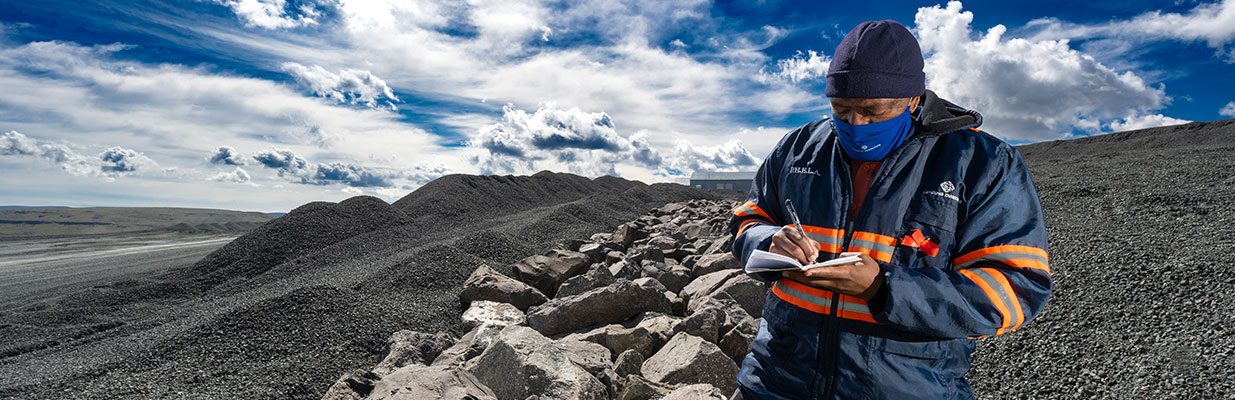
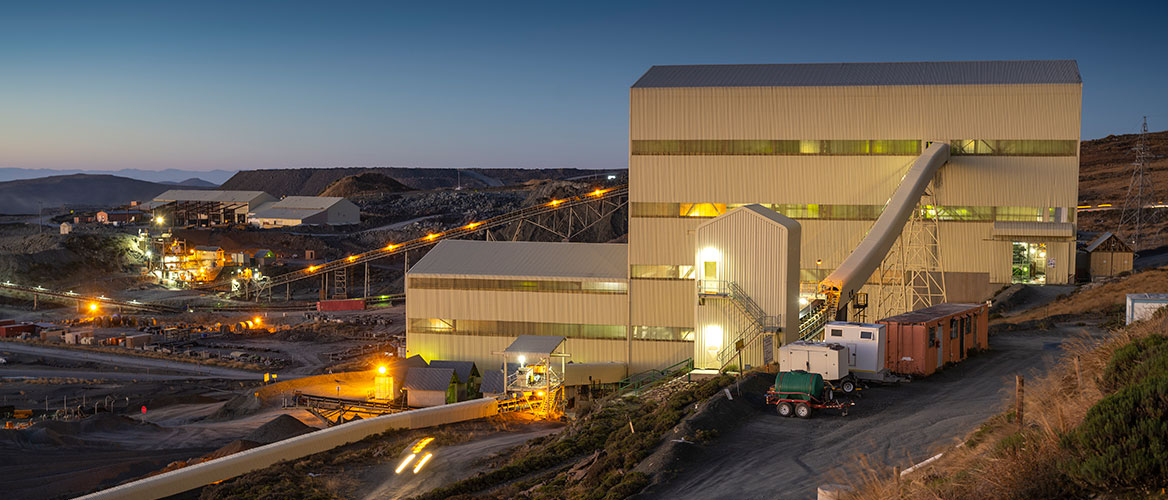
Letšeng is the highest diamond mine in the world and the remoteness and extreme natural environment contributes to extreme operating conditions. We therefore experience unique occupational health and safety challenges requiring specialist knowledge, rigorous planning and exceptional leadership to embed a culture of zero harm.
Our approach
Believing that every injury is preventable, our goal of zero harm is underpinned by a culture of care and accountability that is driven by each employee and advocated for by every leader. We do not only classify a safety incident based on its impact on people or property, but more importantly on its potential for impact or injury. Every safety incident and near miss must be reported and appropriately investigated to implement effective corrective actions and prevent future incidents.
Following an increase in the frequency of safety incidents in the first half of 2021, leadership halted all operations at Letšeng for 24 hours to launch a focused safety campaign aimed at understanding the root causes of the recent safety performance and identify appropriate preventative measures. These discussions with the workforce during the shutdown informed a safety intervention programme, which resulted in an improved safety performance during the second half of the year. More information on the various safety interventions, including our organisational safety perception survey and formation of our “Grey Hair Council” can be found in the Safety case study.
We take a firm stand against non-compliance with our high safety standards for employees, contractors and sub-contractors. Non-compliance leads to disciplinary action against employees (including dismissal) and contractors (including blacklisting and banning offending contractor employees from site).
Our performance
AIFR: 0.93 (2020: 0.76).
Zero fatalities (2020: zero).
Six LTIs across the Group during 2021 (2020: one), resulting in a Group-wide LTIFR of 0.24 (2020: 0.04).
1 restricted work injuries (RWIs) across the Group during 2021 (2020: four).
US$0.7 million spent on ongoing COVID-19 protocols to protect our employees and contractors (2020: US$1.1 million).
ISO 45001 certification retained at Letšeng.
Our context
Skills shortages in the mining sector, exacerbated by our remote location as we strive to employ local people, elevates our focus on being an employer of choice. Gem Diamonds therefore invests considerable resources in attracting and retaining talent, skills, expertise and experience.
Our approach
Our strength is in the quality of our people. To attract and retain talented individuals, we must understand and address employee needs, offer market-related salaries, cultivate a supportive working environment and offer career development opportunities.
We understand that frequent engagement and communication is critical to cultivating a collaborative working environment that facilitates the development and retention of employees. Since the onset of the COVID-19 pandemic, we have engaged regularly with our people to understand their needs.
We recognise that competitive remuneration plays a significant role in attracting and retaining qualified people. We remunerate our employees in line with market-related rates without discrimination based on race or gender . We also ensure that our lowest-graded employees are remunerated above the minimum wage of the host country. While Lesotho and Botswana do not prescribe a minimum wage for the mining sector, we use the construction industry wage guidelines as the standard. We also ensure that minimum requirements for remuneration are stipulated in our labour contracts.
In total, 9.9% of the workforce at Letšeng was compensated at the operation’s minimum wage (2020: 3.4%). In 2021, the lowest-graded permanent employees at Letšeng received 55.6% above the construction sector’s minimum wage (2020: 54%). Other Gem Diamonds employees are remunerated above the minimum wage in line with market-related rates.
We provide benefits and incentives over and above basic remuneration to attract and retain top talent. Incentives retain key individuals through performance-based bonuses and long-term share awards.
We have committees at Group and subsidiary levels to review current remuneration policies, skills and succession planning. Furthermore, non-financial metrics are included in employee and leadership scorecards in line with sustainability goals. See the Remuneration Report in our Annual Report and Accounts 2021 for more information.
Of our permanent workforce at Letšeng, 93% of employees subscribe to the mandatory government retirement provision scheme. Letšeng contributes 7.5% of employees’ annual salaries to this scheme and employees contribute 7.5%. The remaining 7% comprises fixed-term contract employees who are not eligible for this benefit but paid a fixed-term contract allowance at 20%. Employees at our Ghaghoo mine receive a statutory payment upon contract completion, equal to 15% of basic monthly salary for each month of employment.
South Africa and London-based employees are remunerated on a cost-to-company basis, enabling them to elect their retirement schemes and contributions. At our Belgian operations, employees contribute 25% of their salaries to a mandatory government retirement scheme (2020: 25%).
Our performance
353 employees (2020: 357) and 1 305 contractor employees (2020: 1 535) at year end.
The average number of employees was 354 (2020: 377) and the average number of contractor employees was 1 317 (2020: 1 466).
US$37.4 million was spent on employee wages, benefits and incentives (2020: US$31.8 million).
The Group-wide absenteeism rate was 4.5 days per person (2020: 1.8 days).
Zero cases of discrimination were recorded (2020: zero).
Employee demographics
2021
Male
Female
Local
<30
31-50
>50
Board
71%
29%
43%
0%
0%
100%
Senior management
72%
28%
100%
0%
67%
33%
Middle management
79%
21%
89%
6%
75%
19%
Total
78%
22%
98%
7%
76%
17%
2020
Male
Female
Local
<30
31-50
>50
Board
86%
14%
29%
0%
29%
71%
Senior management
67%
33%
78%
0%
67%
33%
Middle management
81%
19%
85%
7%
85%
8%
Total
80%
20 %
98%
10%
77 %
13%
Our context
To remain competitive, we require exceptional people. While we invest in recruiting specialist skills as required, we also empower Gem Diamonds employees to further their careers by providing learning and development opportunities.
Our approach
We invest in the training and development of our employees and identify skills shortages to implement relevant development programmes as well as focussed succession planning for employees. We train and develop our employees through various internal and external programmes, and have a well-established mentorship culture. All employees have clear development plans that incorporate key competencies. These plans are monitored regularly with annual performance reviews to ensure our people are engaged and meet business objectives.
Formal policies support our succession planning. In 2021, these policies were reviewed in depth, updated, enhanced and aligned to the Board’s commitment to diversity and inclusion.
In addition to on-site technical training, we have implemented a strategy to support our commitment to skills development. Our internship programme, which has been in place since 2009, focuses on offering practical field experience for new graduates. To date, we have had 48 graduates with 53% offered permanent employment. Our scholarship programme provides current and future employees the opportunity to study at recognised institutions. Since the programme's inception in 2006, Letšeng has awarded 48 scholarships to young Lesotho citizens to study mining, engineering, emergency medical care and finance. The appointment of our heads of operations and finance at Letšeng, both graduates of our Gem Diamonds development process, was a highlight of 2021. During the year, we also developed an on-site leadership coaching programme that will be rolled out in 2022.
14% of employee career reviews performed (2020: 16%).
20% of female employees received reviews (2020: 17%).
11% of male employees received reviews (2020: 19%).
Our context
Improving employee health and wellness increases morale, reduces absenteeism and improves productivity. As our mines are in extreme locations with limited public infrastructure, we rely on our on-site clinics to provide the necessary emergency, occupational and primary healthcare for our employees. We also prioritise our employees’ mental well-being through tailored counselling and engagement programmes.
Our approach
We strive to provide an environment that actively encourages and supports employee well-being and healthy lifestyles. Effective safety policies and processes reduce risks, strengthen our relationships with employees and regulators, and safeguard the Group’s reputation.
All new employees complete a full medical examination during induction. Similarly, when an employee departs, we perform an exit medical examination.
Our primary healthcare and total occupational disease cases were lower than previous years. No cases of malaria or cholera were reported at our operations for the fourth consecutive year.
At the onset of COVID-19, we began implementing our precautions to ensure the welfare of our workforce. COVID-19 protocols and prevention measures are adjusted as the pandemic progresses.
We implemented active COVID-19 testing at Letšeng to screen and monitor people entering the site. In addition, people showing symptoms of the virus are immediately isolated, assessed and safely transported to their homes or a regulated medical quarantine facility.
An enhanced physical and mental health programme supports our workforce in coping with additional pressures during this period. A mental health practitioner was employed by our Letšeng this year and we contracted ICAS for our Johannesburg employees. ICAS is a leading provider of employee wellness services.
As many of our employees and their families reside in our local communities, we also understand the importance of protecting our surrounding communities. We continued our efforts to support the Government of Lesotho in their fight to curb the spread of COVID-19. See the social section for our progress in 2021.
Our performance
Fully equipped clinic at Letšeng to deal with on-site and occupational medical needs.
98% of employees fully vaccinated 31 December 2021.
100% pre-employment medical examination rate at Letšeng (2020: 100%).
100% exit medical examination rate at Letšeng (2020: 100%).
Decrease in occupational health cases to 348 (2020: 503).
We seek to maintain and consistently improve engagement and communication with our workforce to understand their needs and challenges and to enhance workforce relations. Our Letšeng operation remains non-unionised while Ghaghoo became unionised in 2016.
Our approach
Our approach to employee engagement continues to evolve in line with best practice and our unique circumstances.
Non-Executive Director Mazvi Maharasoa leads employee engagement, ensuring that employee concerns are heard at Board level. Engagements in 2021 included an open forum discussion with employees identifying their representatives.
We maintain a freedom of association policy, and our employees are free to join unions and other collective-bargaining organisations. We aim to swiftly address employee grievances and proactively engage with our employees and their elected representatives to facilitate this. We have established policies and procedures to guide our operations. Our policy provisions are based on our detailed change management system and the host country’s legislation. We ensure that our employees are notified of significant or material changes to the operations or working environments through these established policies and procedures. Our management team also provides frequent engagement with our workforce through multiple forums, including daily toolbox talks, weekly visible felt leadership visits, town hall meetings (subject to COVID-19 protocols) and weekly newsletters.
This year, our engagements highlighted the need to optimise our employees' shift rotations to maximise their time at home. Letšeng operates continuously with shift configurations in line with local legislative requirements, and operational and market demands. We endeavour to ensure the safety of our workforce during shift rotations and strive to minimise shift disruptions. Following the “Stop for Safety" engagements in 2021, an alternative schedule was requested, assessed, successfully piloted and implemented.
We are satisfied that adequate mechanisms are in place to record and address workforce grievances, and we maintain good relationships with our workforce and relevant bodies. Refer to our stakeholder section for more information on our engagements with employees.
Our performance
Zero strikes or lockouts were recorded in 2021 (2020: zero).
Constructive engagement with employee representatives continued in 2021.